
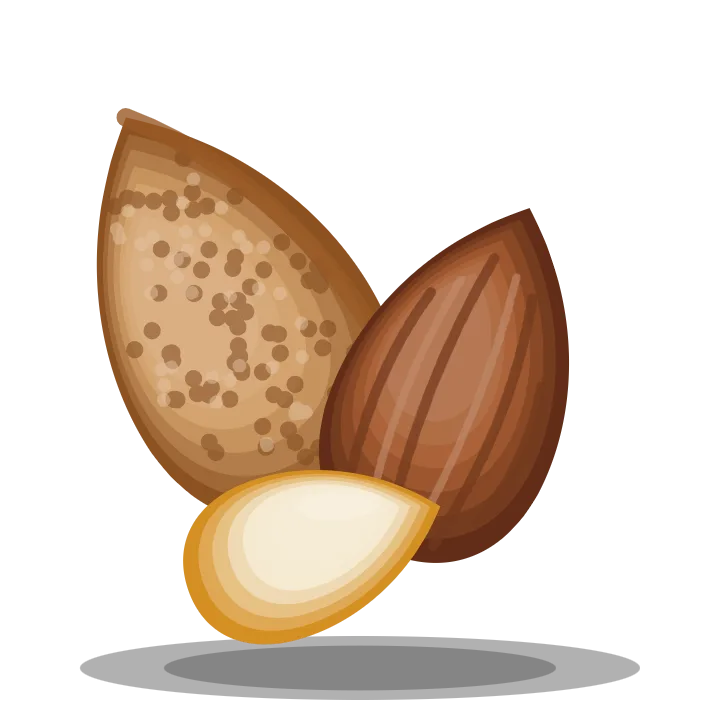
Almond
Prunus amygdalus
nuts & seeds
The seed of the almond tree's fruit, a drupe whose dry flesh splits in two when ripe; sweet, it is eaten as a snack or in cooking. It provides vitamin E, magnesium, calcium and protein, and its polyphenols sit in its brown skin.
- Origin
- Central Asia, acclimatized around the Mediterranean
- Season (United States)
- all year round · grows in your region
- Preparation
- Its skin carries most of its polyphenols: blanched, it loses the greater part of them. Soaking, sprouting or sourdough bring its phytates down — and release the zinc and iron they were holding. Its oxalates leach into water: boiling it and throwing the water out takes a good share with it.
- Molecules
- Vitamin E · Zinc · Magnesium · Calcium · Copper · Insoluble fibers · Protein · Tryptophan · Vitamin B2 (riboflavin) · Vitamin B8 (biotin) · Phosphorus · Monounsaturated fatty acids · Phytosterols · CholineIn small amounts, not counted Ellagitannins · Omega-6 (linoleic acid) · Vitamin B3 (niacin)What slows things down Phytates · Oxalates
- Did you know?
- Pollinating California's almond trees takes nearly a million beehives, trucked in from 49 states every February.