
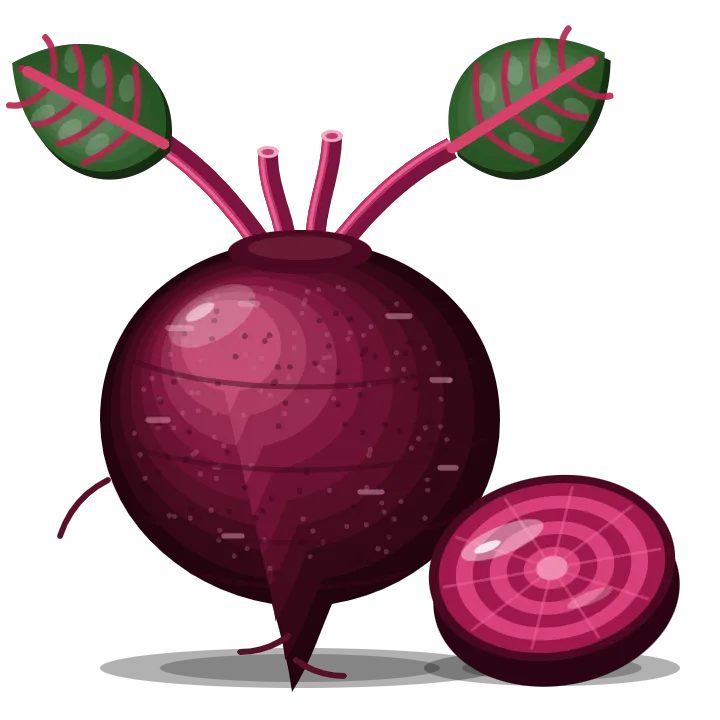
Beet
Beta vulgaris
vegetable · root
The sweet red root of a plant from Mediterranean shores, the same species as chard and sugar beet, whose industry Napoleon encouraged when the British blockade cut Europe off from cane sugar. It provides betalains, nitrates, folate and potassium.
- Origin
- Mediterranean coasts
- Season (United States)
- September to March · grows in your region
- Preparation
- The leaves are eaten, cooked like chard. Cook it with the skin on and without cutting into it: cut, it loses its color — and therefore its betalains — into the cooking water. Its skin is eaten, and that is where its polyphenols sit: worth keeping, then — but under running water, rubbing it, which is what takes off most of what settles there, organic or not. Its oxalates leach into water: boiling it and throwing the water out takes a good share with it.
- Molecules
- Pectins · Betalains · Betaine · Vegetable nitrates · Folates (B9) · PotassiumIn small amounts, not counted SaponinsWhat slows things down Oxalates
- Did you know?
- In some people it turns urine pink: this is beeturia, harmless, in those who do not break down its pigment.