
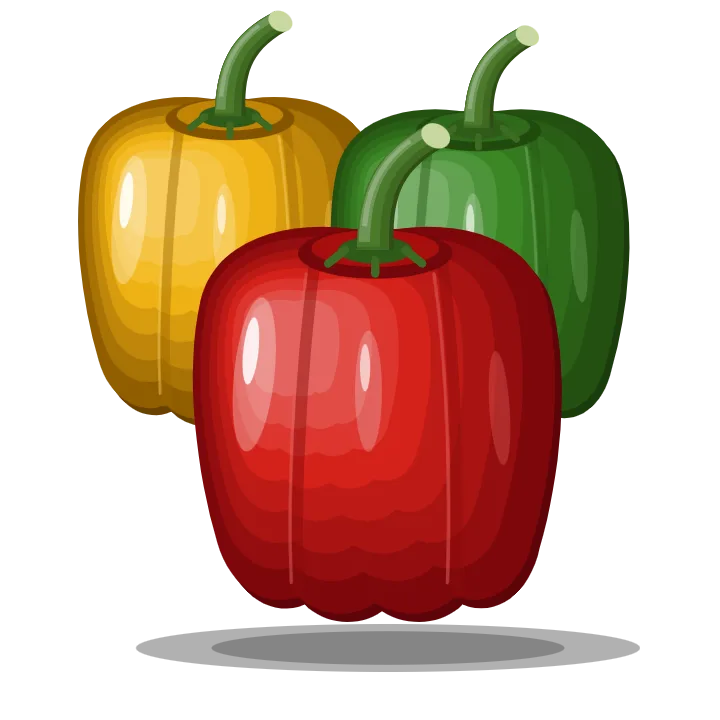
Bell pepper
Capsicum annuum
vegetable · fruit
A large, fleshy, mild fruit, green, yellow or red, of a pepper without heat, raw or cooked; of the same species as most chillies, the most cultivated of its genus. The red one, ripe, brings beta-carotene and 128 mg of vitamin C per 100 g, more than twice an orange.
- Origin
- Americas
- Season (United States)
- June to October · grows in your region
- Preparation
- The white inside carries the bitterness, not the seeds. And it is the skin, not the seeds, that weighs most on digestion: roasted then peeled, it goes down far better. Its skin is eaten, and that is where its polyphenols sit: worth keeping, then — but under running water, rubbing it, which is what takes off most of what settles there, organic or not. Its lectins need a real boil, not just warmth.
- Molecules
- Beta-carotene (vitamin A) · Beta-cryptoxanthin · Vitamin CIn small amounts, not counted Pectins · Lutein and zeaxanthin · Lycopene · Vitamin E · Vitamin B6What slows things down Lectins
- Did you know?
- Green, yellow, red: often the same fruit at three stages of ripeness.