
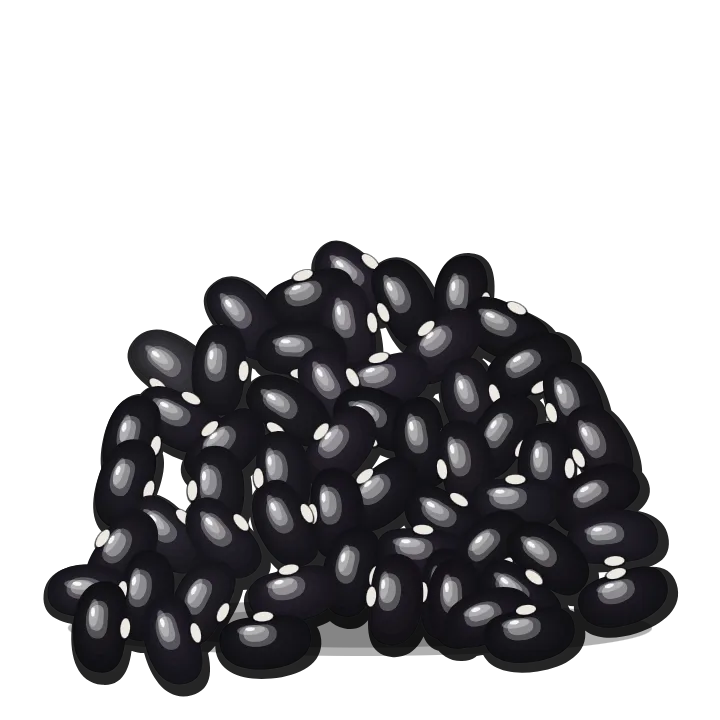
Black bean
Phaseolus vulgaris
legume
Small black-skinned beans of the common bean, a plant from Mesoamerica; the backbone of Latin American cooking, from feijoada to frijoles. They provide anthocyanins, fibre, protein, folate, iron and magnesium.
- Origin
- Mesoamerica
- Season (United States)
- all year round · grows in your region
- Preparation
- Like the red kidney bean, to a lesser degree: soak, discard the water, and bring to a real boil — undercooked, it contains a lectin that upsets the gut. Soaking, sprouting or sourdough bring its phytates down — and release the zinc and iron they were holding.
- Molecules
- Resistant starch RS1 · GOS (galacto-oligosaccharides) · Anthocyanins · Folates (B9) · Vitamin B1 (thiamine) · Plant iron · Magnesium · Protein · Lysine · MolybdenumIn small amounts, not counted Ergothioneine · PhosphorusWhat slows things down Phytates
- Did you know?
- Christopher Columbus discovered the bean at Nuevitas, in Cuba, in October 1492, on his first voyage.