
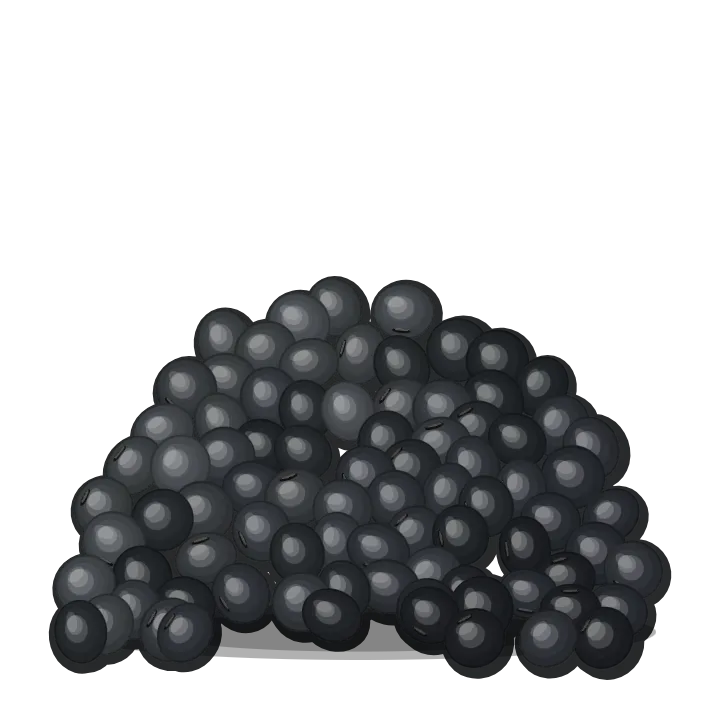
Black soybean
Glycine max
legume
Black-skinned soybeans, the same species as yellow soy, simmered sweet in Japan or cooked like a bean. They provide protein, isoflavones and anthocyanins.
- Origin
- China and Japan
- Season (United States)
- all year round
- Preparation
- The beans soak overnight, then cook for one and a half to two hours; they are always eaten well cooked, never raw — simmered sweet (kuromame) or like any bean. Soaking, sprouting or sourdough bring its phytates down — and release the zinc and iron they were holding. Most of its goitrogens go with cooking, even a short one. High in purines: to rotate rather than stack, if the ground is sensitive.
- Molecules
- Resistant starch RS1 · GOS (galacto-oligosaccharides) · Anthocyanins · Isoflavones · Spermidine · Saponins · Folates (B9) · Vitamin B1 (thiamine) · Plant iron · Zinc · Calcium · Protein · Lysine · Tryptophan · Vitamin B2 (riboflavin) · Vitamin B8 (biotin) · Phosphorus · CholineWhat slows things down Phytates · Goitrogens · Purines
- Did you know?
- At Japanese New Year, kuromame are part of osechi, the meal eaten to wish the family good health for the year.