
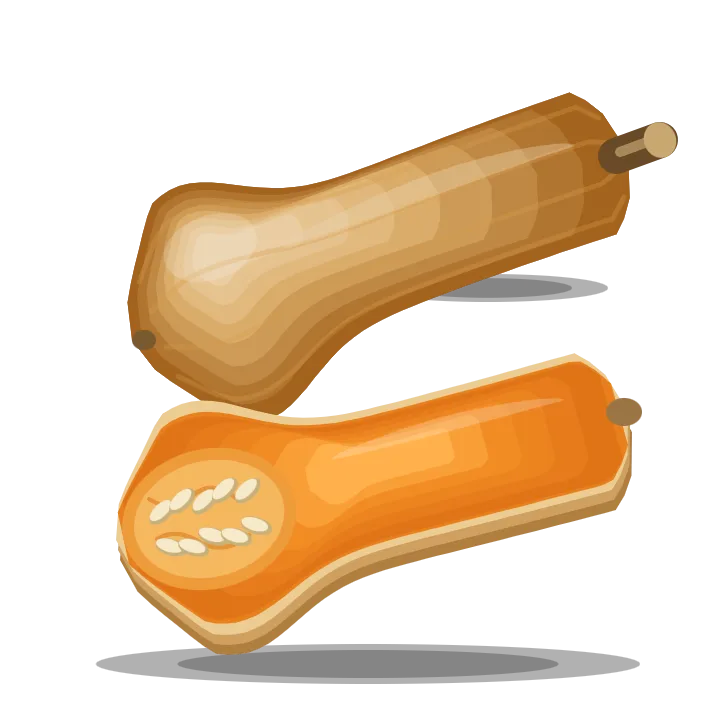
Butternut squash
Cucurbita moschata
vegetable
A musk squash shaped like an elongated pear, with beige skin and melting orange flesh tasting of hazelnut; one of the five most cultivated squash species. It provides beta-carotene, beta-cryptoxanthin and potassium.
- Origin
- America (cross created in 1944)
- Season (United States)
- September to February · grows in your region
- Preparation
- The thin skin is eaten when roasted; for a purée or soup, it is peeled. The seeds are eaten too, roasted. If it is truly bitter, throw it out without tasting more: that is cucurbitacin, which makes you seriously ill, and cooking does not remove it. Its skin is eaten, and that is where its polyphenols sit: worth keeping, then — but under running water, rubbing it, which is what takes off most of what settles there, organic or not.
- Molecules
- Beta-carotene (vitamin A) · Beta-cryptoxanthin · PotassiumIn small amounts, not counted Lutein and zeaxanthin
- Did you know?
- It was created in 1944 by Charles Leggett, of Stow, Massachusetts, by crossing a pumpkin with a gooseneck squash.