
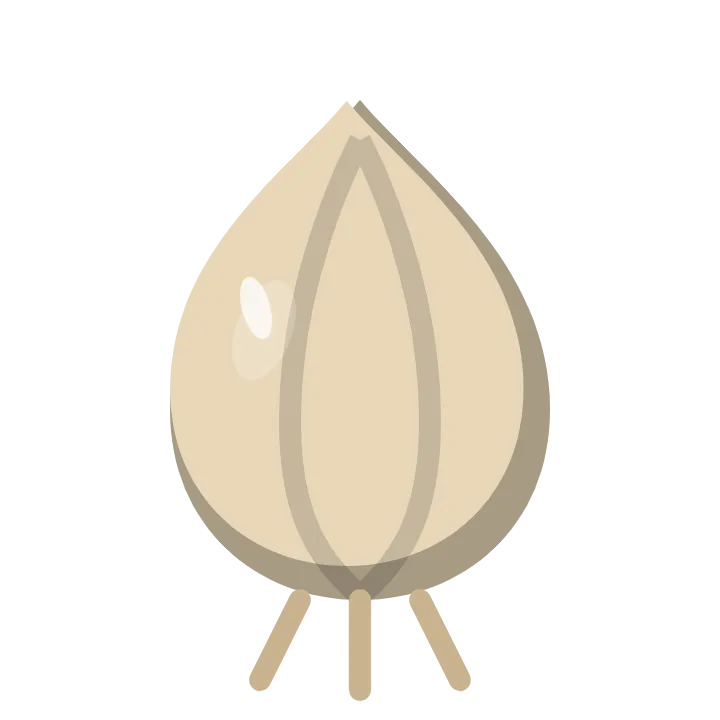
Camas
Camassia quamash
root · prebiotic
⚠️ Toxic look-alike
Never eat this plant unless you are certain it is not its toxic look-alike.
Death camas (Toxicoscordion) grows in the same meadows, and out of flower their bulbs and leaves are identical. In flower, camas is blue or violet, in a loose spike; death camas has small, tightly packed cream or white flowers. Its alkaloids cause vomiting, salivation, weakness and heart rhythm disorders, sometimes fatal. Indigenous peoples harvested only in flower, pulling up any doubtful plant.
If in the slightest doubt, leave it. If you feel unwell after eating it, even several hours later, call Poison Control (1-800-222-1222) or 911.
Inulin-rich bulb, pit-cooked for one to two days by Indigenous peoples until brown and sweet.
- Origin
- Western North America
- Where to find it
- Its damp meadows bloom blue in spring, like Weippe Prairie in Idaho, where the Nez Perce fed Lewis and Clark; in Europe, its bulbs are sold as garden flowers.
- Season (United States)
- May to July · grows in your region
- Preparation
- The bulbs are peeled before cooking; raw or undercooked, they are bland and cause gas.
- Molecules
- Fructans (inulin, FOS)In small amounts, not counted Insoluble fibers
- Did you know?
- Slow cooking turns the inulin into fructose: the bulb goes from bland to a taste of caramelized pear.