
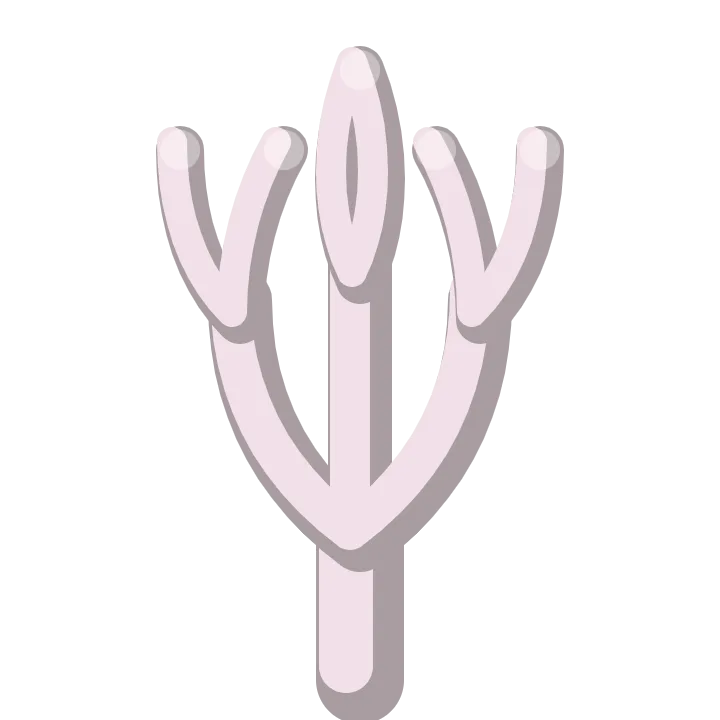
Cauliflower coral mushroom
Ramaria botrytis
mushroom
⚠️ Toxic look-alike
Never eat this mushroom unless you are certain it is not its toxic look-alike.
Other coral fungi, especially the salmon coral (Ramaria formosa) and the pale coral, look very much like it: they cause vomiting, diarrhea and violent colic a few hours after the meal. The cauliflower coral has a very thick white base, white then cream branches, and pink to purplish tips; the salmon coral has salmon-pink to orange branches and yellow tips. Even the true cauliflower coral gives some people diarrhea: only young specimens, a small portion the first time. Have every harvest checked by a pharmacist or a mycologist.
If in the slightest doubt, leave it. If you feel unwell after eating it, even several hours later, call Poison Control (1-800-222-1222) or 911.
A large cluster of white branches with pink or purplish tips, like a cauliflower, with a mild taste, pan-fried or in an omelet.
- Origin
- Broadleaf forests of Europe
- Season (United States)
- August to October
- Preparation
- The earthy base is cut off, the branches brushed under water to remove soil and needles, then it is pan-fried for about ten minutes; it is always eaten cooked. If you pick it yourself, have the mushroom checked by a pharmacist or a mycological society before eating it.
- Molecules
- Mushroom beta-glucansIn small amounts, not counted Ergothioneine
- Did you know?
- A single cluster can exceed 15 centimeters and weigh nearly a kilo.