
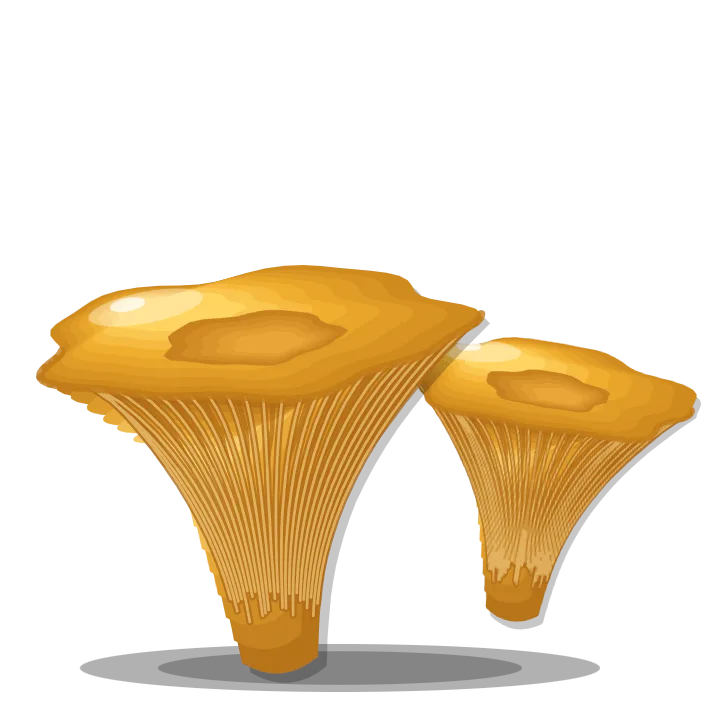
Chanterelle
Afrocantharellus spp., Cantharellus spp. …
mushroom
An egg-yolk-yellow mushroom with a cap 4 to 10 cm across, first domed then hollowed into a funnel; underneath, folds rather than true gills, and a fruity apricot smell. It provides beta-glucans and vitamin D. Yellow all over, cap included, and fleshy, it differs from yellowfoot and the yellow chanterelle, which have a brown cap and thin flesh.
- Origin
- Forests of Europe
- Season (United States)
- June to October · grows in your region
- Preparation
- It is always eaten cooked, pan-fried for a quarter of an hour, long enough for it to release its water. It is brushed rather than washed: waterlogged, it gives everything off in the pan. Its dangerous look-alike is the jack-o'-lantern mushroom, highly toxic and more orange, growing in clusters on wood around the Mediterranean: the chanterelle grows on the ground, smells of apricot and has ridges, not true gills. In Sweden and Scotland, the deadly webcap, which destroys the kidneys, has also been mistaken for it: it is brown and has true gills. The false chanterelle, more orange with forked gills, is worthless at best. If you pick it yourself, have the mushroom checked by a pharmacist or a mycological society before eating it.
- Molecules
- Mushroom beta-glucans · Vitamin DIn small amounts, not counted Ergothioneine
- Did you know?
- It cannot be cultivated, and logging drives it away: eight years after a clear-cut, none had been seen to come back.