
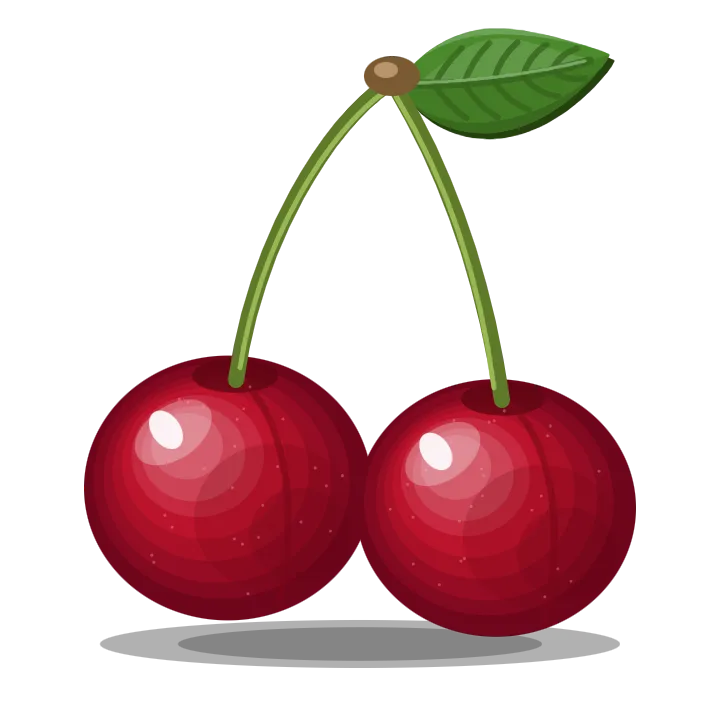
Cherry
Prunus spp.
fruit
A red stone fruit, descended from the wild cherry and the sour cherry: soft, juicy gean cherries, and firm, sweet bigarreaus such as the Burlat. It provides anthocyanins.
- Origin
- Asia Minor (Black Sea)
- Season (United States)
- May to July · grows in your region
- Preparation
- The kernel inside the stone holds amygdalin, which releases cyanide as it digests: swallowing a whole stone is harmless, cracking one is not. Its skin is eaten, and that is where its polyphenols sit: worth keeping, then — but under running water, rubbing it, which is what takes off most of what settles there, organic or not.
- Molecules
- AnthocyaninsIn small amounts, not counted Phenolic acids
- Did you know?
- The Roman general Lucullus is said to have brought it back from Cerasus, on the Black Sea, after his campaign against Mithridates.