
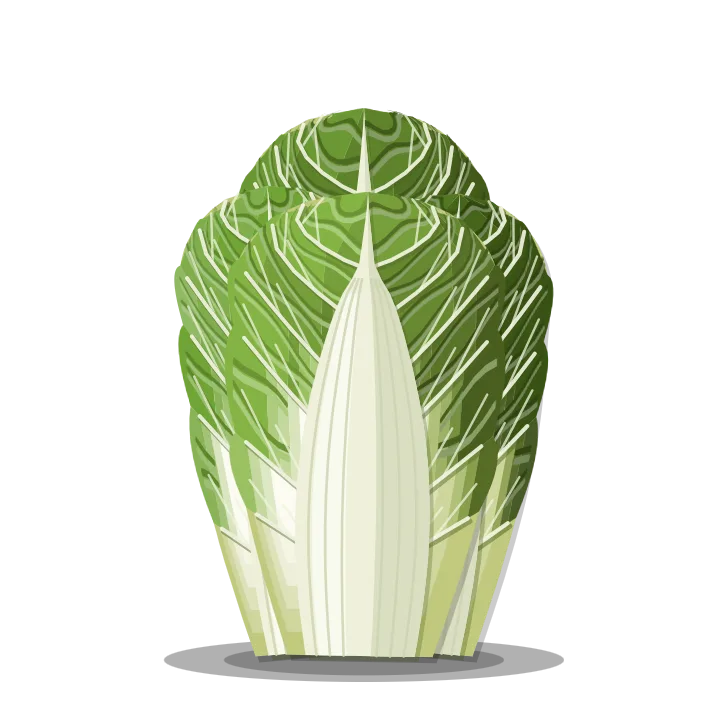
Chinese cabbage
Brassica rapa subsp. pekinensis
vegetable · leaf
An elongated cabbage with tender, juicy leaves, pe-tsai or napa cabbage, baechu in Korean; in soups, stir-fried, in dumpling fillings, and above all in kimchi. It provides vitamin K1, calcium and glucosinolates. Not to be confused with bok choy, which is sometimes also sold as “Chinese cabbage”.
- Origin
- Northern China
- Season (United States)
- September to February · grows in your region
- Preparation
- Damaged outer leaves are removed, then it is sliced: raw in salads, stir-fried for two or three minutes, in soups, or lacto-fermented into kimchi; the white rib is eaten too. It grows at ground level and catches the splashes of watering: washing it leaf by leaf, in plenty of water, beats a quick rinse of the whole bunch. Most of its goitrogens go with cooking, even a short one.
- Molecules
- Glucobrassicin → I3C · Vegetable nitrates · Vitamin K1 · CalciumIn small amounts, not counted Lutein and zeaxanthinWhat slows things down Goitrogens
- Did you know?
- In Korea, kimjang, the communal making of kimchi for winter, has been on UNESCO's intangible cultural heritage list since 2013.