
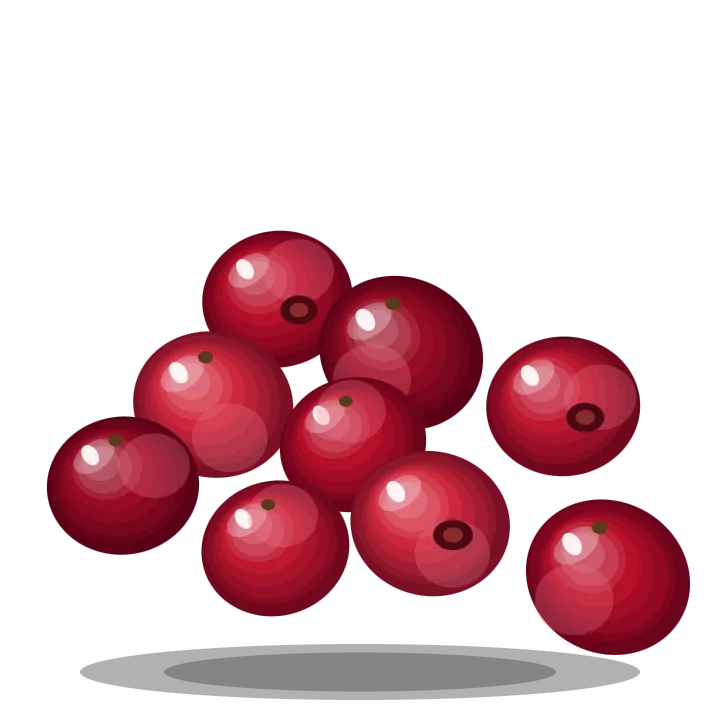
Cranberry
Vaccinium macrocarpon, V. oxycoccos
fruit
Small, tart red berries of a creeping shrub of the bogs of eastern North America; rarely eaten raw: dried, as juice, or as sauce with the Thanksgiving turkey. They provide proanthocyanidins, anthocyanins and quercetin.
- Origin
- Bogs of North America
- Season (United States)
- all year round · grows in your region
- Preparation
- Raw, it is very sour and rarely eaten that way: it is cooked for 10 minutes with a little sugar until it bursts, into a sauce or compote, or bought dried; skin and seeds are eaten. Its skin is eaten, and that is where its polyphenols sit: worth keeping, then — but under running water, rubbing it, which is what takes off most of what settles there, organic or not. Its tannins hold back plant iron: better away from an iron-rich meal than during it.
- Molecules
- Pectins · Anthocyanins · Flavanols and procyanidins · Flavonols (quercetin)In small amounts, not counted Stilbenes (resveratrol)What slows things down Tannins (iron brake)
- Did you know?
- In October the beds are flooded: the berries float, and the pickers, knee-deep in water, corral them inside a floating boom.