
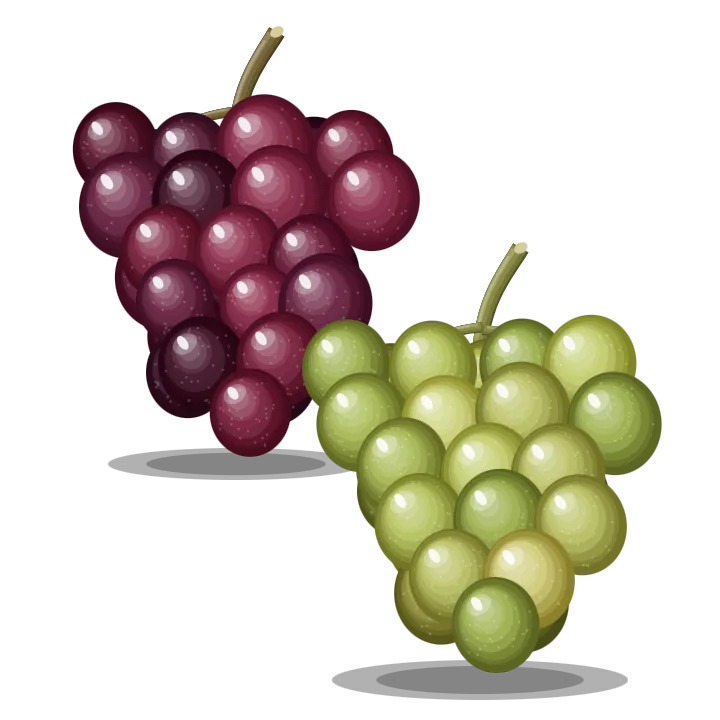
Grape
Vitis spp.
fruit
Berries in bunches of a climbing vine with tendrils, eaten fresh, dried as raisins or fermented into wine; the vine has been domesticated for 6,000 to 8,000 years. Its skin and seeds carry anthocyanins, procyanidins and resveratrol.
- Origin
- Caucasus and Near East
- Season (United States)
- August to October · grows in your region
- Preparation
- The seeds are eaten: crunchy, they are rich in proanthocyanidins. Its skin is eaten, and that is where its polyphenols sit: worth keeping, then — but under running water, rubbing it, which is what takes off most of what settles there, organic or not. Its tannins hold back plant iron: better away from an iron-rich meal than during it.
- Molecules
- Anthocyanins · Flavanols and procyanidins · Stilbenes (resveratrol)In small amounts, not counted Flavonols (quercetin) · Lutein and zeaxanthinWhat slows things down Tannins (iron brake)
- Did you know?
- The oldest mentions of the vine, all around the Mediterranean, already speak of wine.