
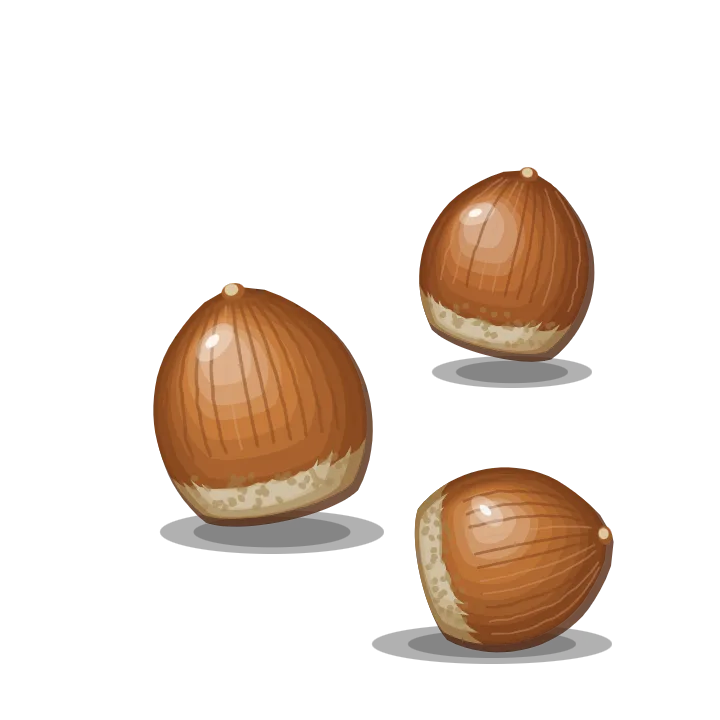
Hazelnut
Corylus spp.
nuts & seeds
The nut of the hazel, a shrub 5 to 8 metres tall that grows wild throughout Europe; eaten plain or roasted. It provides vitamin E, manganese and monounsaturated fats.
- Origin
- Europe and Asia Minor
- Season (United States)
- September to October · grows in your region
- Preparation
- Its thin, slightly bitter brown skin is eaten; once roasted, it rubs off in a cloth. Soaking, sprouting or sourdough bring its phytates down — and release the zinc and iron they were holding.
- Molecules
- Vitamin E · Vitamin B6 · Copper · Manganese · Insoluble fibers · Monounsaturated fatty acidsIn small amounts, not counted Flavanols and procyanidins · Spermidine · Calcium · Vitamin B8 (biotin) · PhosphorusWhat slows things down Phytates
- Did you know?
- Turkey supplies two thirds of the world's hazelnuts, from a coastal strip along the Black Sea around Ordu, Giresun and Trabzon.