
Kamchatka fritillary (chocolate lily)
Fritillaria camschatcensis
root
⚠️ Toxic look-alike
Never eat this plant unless you are certain it is not its toxic look-alike.
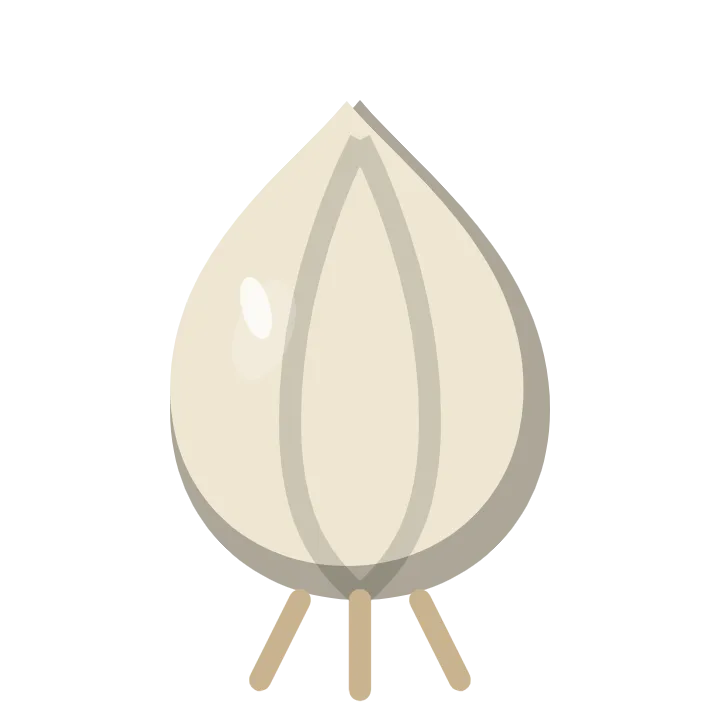
Other fritillaries, like the snake's head fritillary and the crown imperial of gardens, contain alkaloids toxic to the heart; and the North Pacific meadows also host death camas, which is deadly. Kamchatka fritillary has one or two whorls of glossy green leaves around the stem, brown-black bell flowers mottled with green, smelling of rotten meat, and a bulb made of white scales that come apart like grains of rice. Death camas has V-shaped, grooved leaves rising from the ground, creamy-white flowers in a cluster and a solid bulb with a blackish coat; within one to a few hours it causes vomiting, drooling, a drop in blood pressure and a slowed heart, sometimes fatal. Never dig up a bulb whose flower you have not seen.
If in the slightest doubt, leave it. If you feel unwell after eating it, even several hours later, call Poison Control (1-800-222-1222) or 911.
Bulbs made of small white scales like grains of rice, boiled or steamed, with eulachon grease.
- Origin
- North Pacific coasts (Alaska, British Columbia, Kamchatka, Japan)
- Where to find it
- The Tlingit and Haida used to harvest its bulbs, called “wild rice” in Alaska; it grows in damp seaside meadows.
- Season (United States)
- July to September · grows in your region
- Preparation
- The bulbs are washed and broken into scales, sometimes soaked for a few hours to lose their bitterness; they are eaten cooked, never raw.
- Molecules
- In small amounts, not counted Insoluble fibers
- Did you know?
- Its brown-black flowers smell of rotten meat, to attract the flies that pollinate them.