
Pignut
Conopodium majus
root
⚠️ Toxic look-alike
Never eat this plant unless you are certain it is not its toxic look-alike.
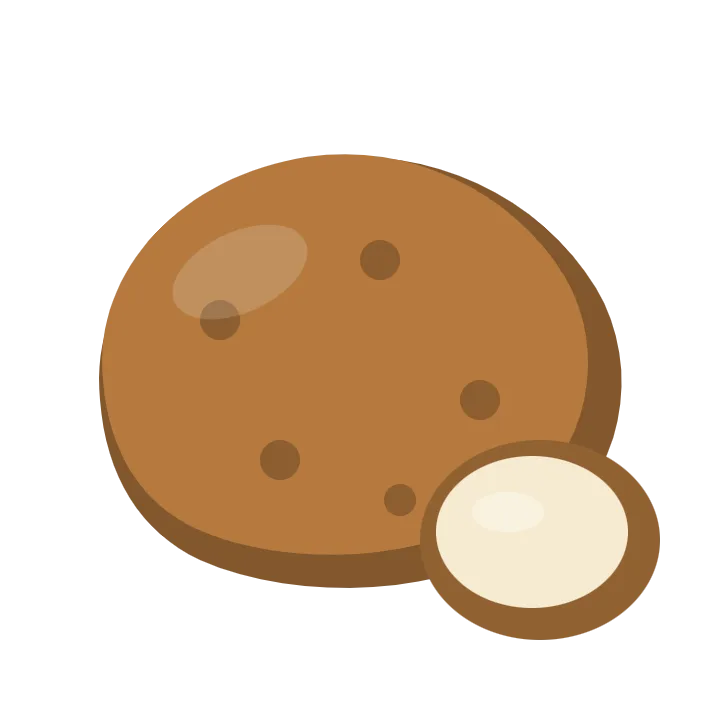
It is an umbellifer: it grows with poison hemlock and, in damp places, with hemlock water-dropwort, whose spindle-shaped roots are among the most toxic in Europe (convulsions in under an hour, often fatal). Pignut has very finely divided leaves, a single round, dark-brown tuber at the end of a very thin root that breaks easily, and grows in open woods and dry meadows; water-dropwort has a cluster of fleshy roots whose cut surface turns yellow within minutes, hemlock a purple-spotted stem and a mousy smell. Never dig up anything you have not seen in flower, following the stem down to the tuber.
If in the slightest doubt, leave it. If you feel unwell after eating it, even several hours later, call Poison Control (1-800-222-1222) or 911.
A small round tuber at the end of a very thin root, tasting of hazelnut and chestnut, nibbled raw or roasted.
- Origin
- Western Europe
- Where to find it
- In open woods, heaths and never-plowed meadows of Great Britain and western France; you have to follow the thin stem down to the tuber, sometimes 10 cm underground.
- Season (United States)
- April to July
- Preparation
- The tuber is dug up by following the thin root, scraped to remove its brown skin and eaten raw, or roasted for a few minutes like a chestnut.
- Molecules
- In small amounts, not counted Falcarinol · Insoluble fibers
- Did you know?
- English children dug it up along the way: it is the “pignut”.