
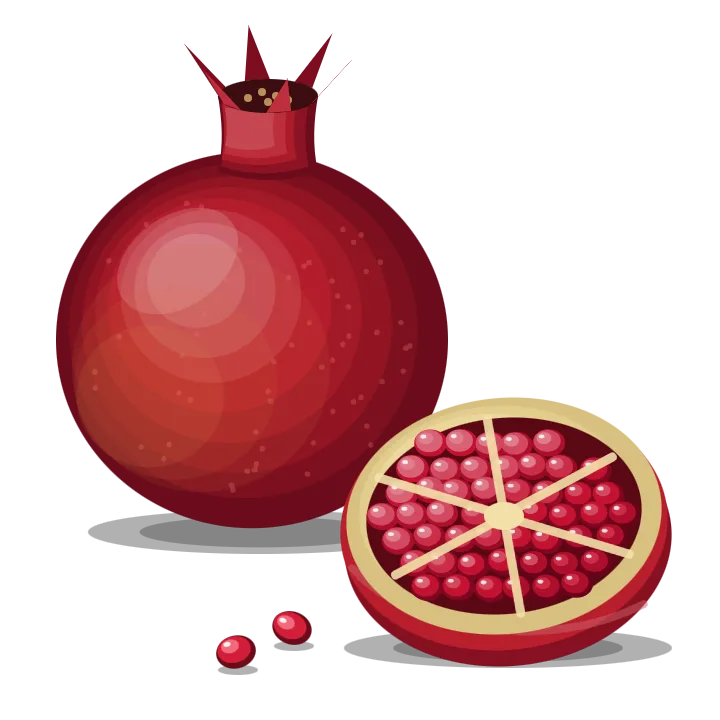
Pomegranate
Punica granatum
fruit
A large yellow to orange-red berry from a tree grown since earliest Antiquity, native to the mountains of Central Asia; it holds about 600 juicy seeds on average. It provides ellagitannins, which the gut flora turns into urolithins.
- Origin
- Persia and Caucasus
- Season (United States)
- all year round · grows in your region
- Preparation
- Open it and free the seeds under water: the seeds sink, the bitter membranes float. Its tannins hold back plant iron: better away from an iron-rich meal than during it.
- Molecules
- EllagitanninsWhat slows things down Tannins (iron brake)
- Did you know?
- The soldier's grenade may take its name from the fruit, or from the Latin granatus, “full of grains”; in 1433, the fleet of Alfonso the Magnanimous loaded 200,000 “copper pomegranates”.