
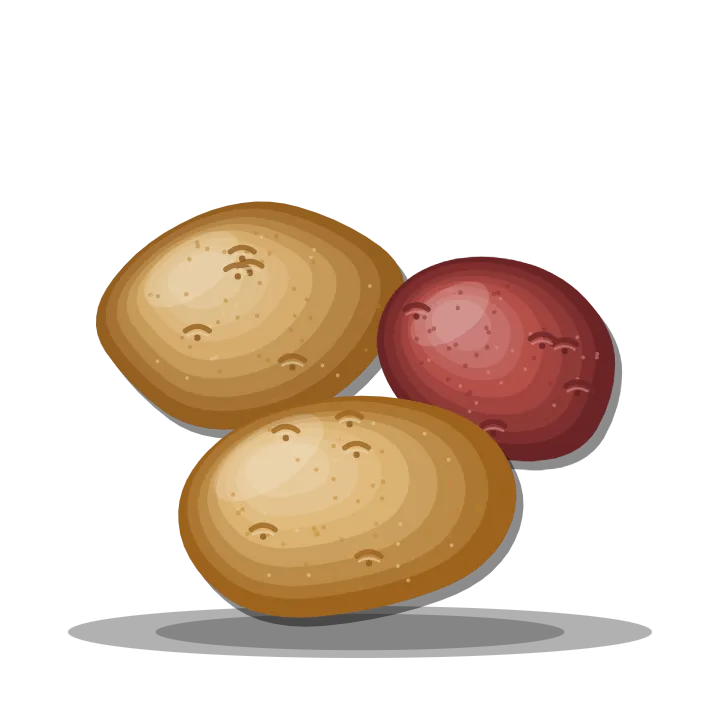
Potato
Solanum spp.
vegetable · root
The tuber of a plant of the tomato family, born in southern Peru and northern Bolivia 8,000 years ago: the world's leading non-cereal staple. Cooked then cooled, part of its starch becomes resistant and feeds the colon.
- Origin
- Andes (Lake Titicaca)
- Season (United States)
- all year round · grows in your region
- Preparation
- Anything that has gone green, and the sprouts, are cut away: that is solanine, and cooking does not remove it. Dark, cool, dry storage simply prevents it. Its skin is eaten, and that is where its polyphenols sit: worth keeping, then — but under running water, rubbing it, which is what takes off most of what settles there, organic or not.
- Molecules
- Phenolic acids · Vitamin B6 · PotassiumIn small amounts, not counted Vitamin C · Magnesium · Copper · Vitamin B3 (niacin) · Choline
- Did you know?
- In Savoy it was called tartifle, hence tartiflette; the Italians named it tartufoli, “little truffles”.