
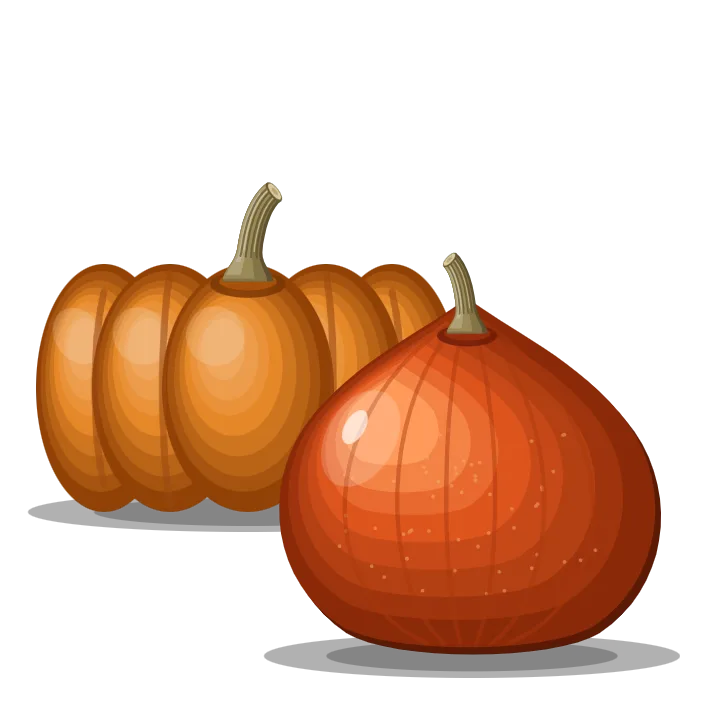
Pumpkin / red kuri squash
Cucurbita maxima
vegetable
Large South American squashes with orange flesh; the red kuri, pear-shaped, with floury, chestnut-flavoured flesh, comes from a variety grown in Japan. They provide beta-carotene and potassium.
- Origin
- Americas
- Season (United States)
- September to January · grows in your region
- Preparation
- Red kuri skin is eaten once cooked; pumpkin skin, too tough, is removed. The seeds of both are eaten, roasted. If it is truly bitter, throw it out without tasting more: that is cucurbitacin, which makes you seriously ill, and cooking does not remove it.
- Molecules
- Beta-carotene (vitamin A) · Beta-cryptoxanthin · PotassiumIn small amounts, not counted Insoluble fibers
- Did you know?
- In 1476, the French word “potiron” meant a mushroom; it only took its present sense of pumpkin in the 16th century.