
Quince
Cydonia oblonga
fruit
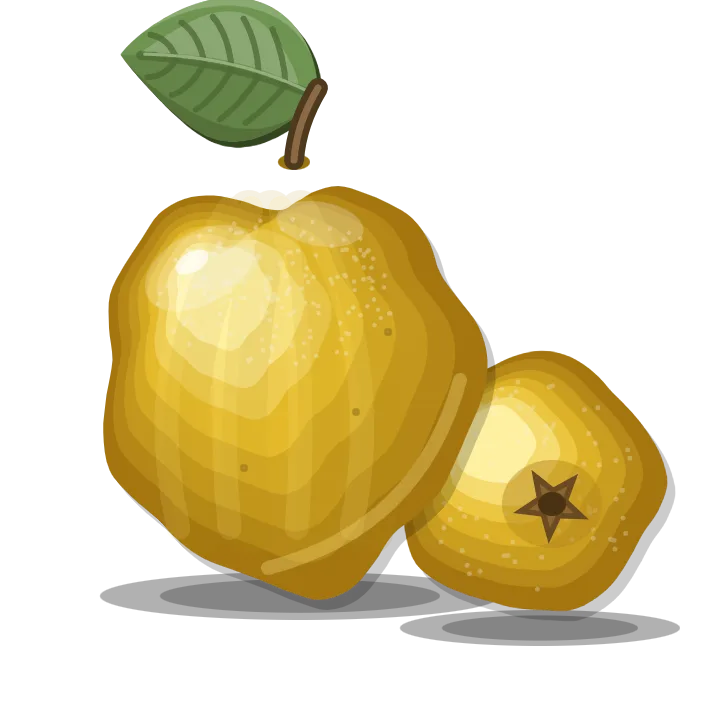
A large yellow, downy, very fragrant fruit of a small tree from the Caucasus and Iran, alone in its genus; hard and harsh raw, it is cooked into jelly, quince paste or baked. It provides pectins and tannins.
- Origin
- Caucasus and Iran
- Season (United States)
- October to December · grows in your region
- Preparation
- The seeds are not crunched: they carry amygdalin. Cooked whole in a little bag, they help the jelly set. Its skin is eaten, and that is where its polyphenols sit: worth keeping, then — but under running water, rubbing it, which is what takes off most of what settles there, organic or not. Its tannins hold back plant iron: better away from an iron-rich meal than during it.
- Molecules
- PectinsIn small amounts, not counted Insoluble fibersWhat slows things down Tannins (iron brake)
- Did you know?
- The word “marmalade” comes from the Portuguese marmelada, quince paste, from marmelo, “quince”; some ancients called it the “golden apple”.