
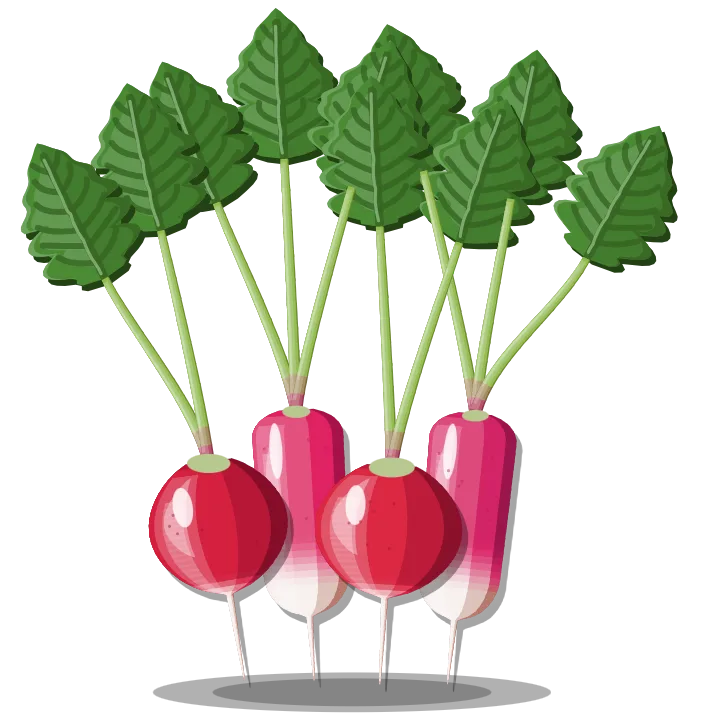
Radish
Raphanus sativus
vegetable · root
A small crunchy, peppery root of a crucifer whose every part is edible; pink and long or red and round, its heat comes mostly from warmth and lack of water while growing. It provides glucosinolates.
- Origin
- Asia
- Season (United States)
- March to June · grows in your region
- Preparation
- The greens are eaten, in soup or pesto. Cut off the tops as soon as you get home from the market: left on, they keep drawing water from the root, which goes soft within a day. Its skin is eaten, and that is where its polyphenols sit: worth keeping, then — but under running water, rubbing it, which is what takes off most of what settles there, organic or not. The bite IS the molecule: long cooking erases it, raw and short cooking keep it. Most of its goitrogens go with cooking, even a short one.
- Molecules
- Pungent glucosinolatesIn small amounts, not counted Anthocyanins · Vegetable nitrates · Vitamin CWhat slows things down Goitrogens
- Did you know?
- In Oaxaca, Mexico, the Night of the Radishes is celebrated every 23 December, with giant carved radishes. Herodotus claimed the builders of the Great Pyramid received a ration of them — archaeology has not confirmed it.