
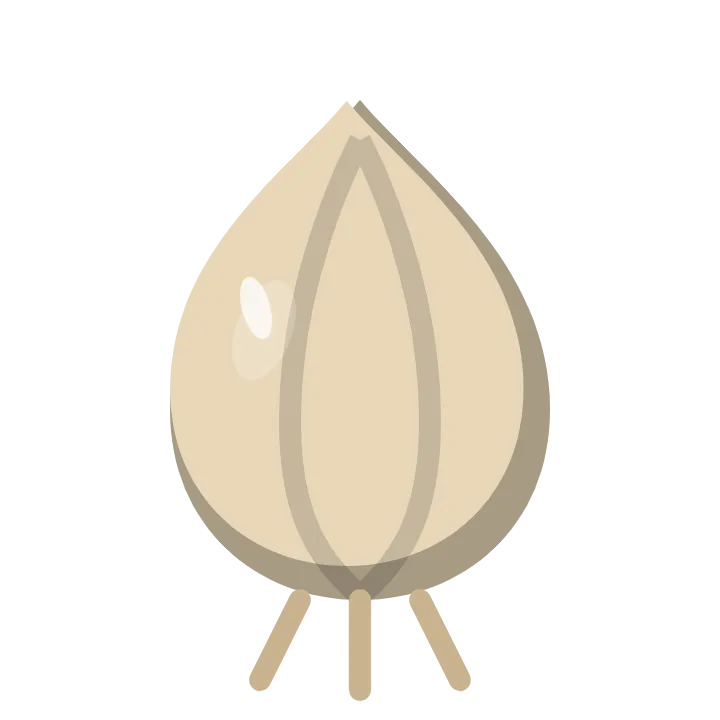
Sego lily (calochortus)
Calochortus nuttallii
root
⚠️ Toxic look-alike
Never eat this plant unless you are certain it is not its toxic look-alike.
Death camas (Toxicoscordion), which is deadly, grows in the same meadows, with similar bulbs and leaves out of flower. In flower, sego lily bears three large white or lilac petals marked with yellow at the base; death camas has small cream flowers packed in a cluster. Its alkaloids cause vomiting, weakness and heart problems, sometimes fatal. It is protected in places: it is not picked.
If in the slightest doubt, leave it. If you feel unwell after eating it, even several hours later, call Poison Control (1-800-222-1222) or 911.
Small nutty bulbs, boiled or roasted, which fed Utah's first settlers.
- Origin
- Western North America (Utah)
- Where to find it
- On dry sagebrush slopes of the Great Basin, from Utah to Montana; it is no longer dug up.
- Season (United States)
- May to June
- Preparation
- The bulbs are peeled of their coat, then cooked for about twenty minutes.
- Molecules
- In small amounts, not counted Insoluble fibers
- Did you know?
- The sego lily is Utah's flower, in memory of the famines of 1848.