
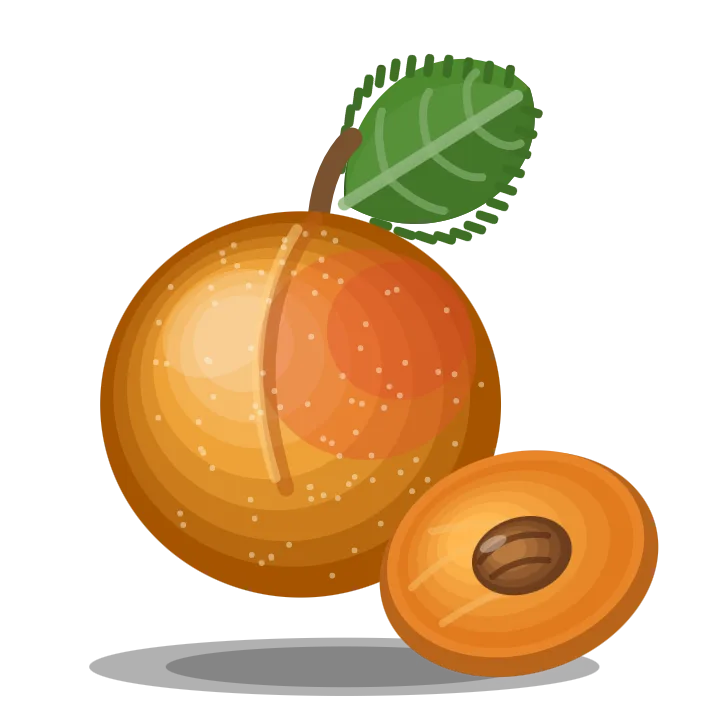
Apricot
Prunus armeniaca, P. dasycarpa
fruit
A stone fruit with orange flesh, which came from Central Asia through Iran and Armenia, and which the Greek physician Dioscorides called “Armenian apple”. It provides beta-carotene, pectin and potassium.
- Origin
- Central Asia, arrived via the Silk Road
- Season (United States)
- June to August · grows in your region
- Preparation
- The kernel inside the stone holds amygdalin, which releases cyanide as it digests: stones are not to be cracked open, however much they smell of almond. Its skin is eaten, and that is where its polyphenols sit: worth keeping, then — but under running water, rubbing it, which is what takes off most of what settles there, organic or not.
- Molecules
- Pectins · Beta-carotene (vitamin A) · PotassiumIn small amounts, not counted Lignans · Flavonols (quercetin) · Phenolic acids · Beta-cryptoxanthin · Inositol
- Did you know?
- Its Latin name, Prunus armeniaca, keeps the trace of a mistake: it was thought to come from Armenia until the 20th century.