
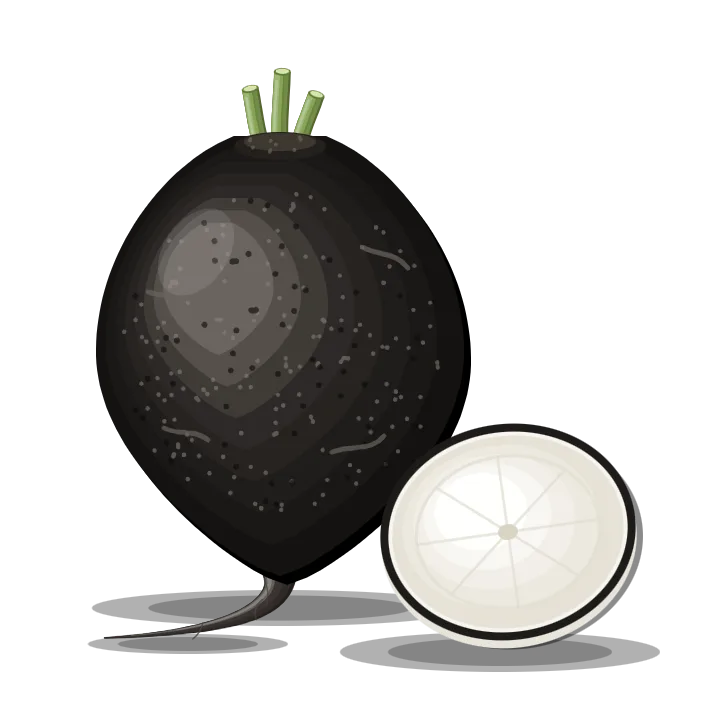
Black radish
Raphanus sativus var. sativus
vegetable · root
A large winter radish with black skin and firm, very pungent white flesh; grated raw with a little salt, or sliced. It provides pungent glucosinolates.
- Origin
- Eastern Mediterranean
- Season (United States)
- October to March
- Preparation
- It is scrubbed; the black skin is edible but sharper, so it is often peeled. Grated raw with a little salt, which tames its bite, or cooked like a turnip. Its skin is eaten, and that is where its polyphenols sit: worth keeping, then — but under running water, rubbing it, which is what takes off most of what settles there, organic or not. The bite IS the molecule: long cooking erases it, raw and short cooking keep it. Most of its goitrogens go with cooking, even a short one.
- Molecules
- Pungent glucosinolatesWhat slows things down Goitrogens
- Did you know?
- Despite appearances, the big black radish and the little spring radish belong to the same group, from western Eurasia, between the Mediterranean and the Black Sea.