
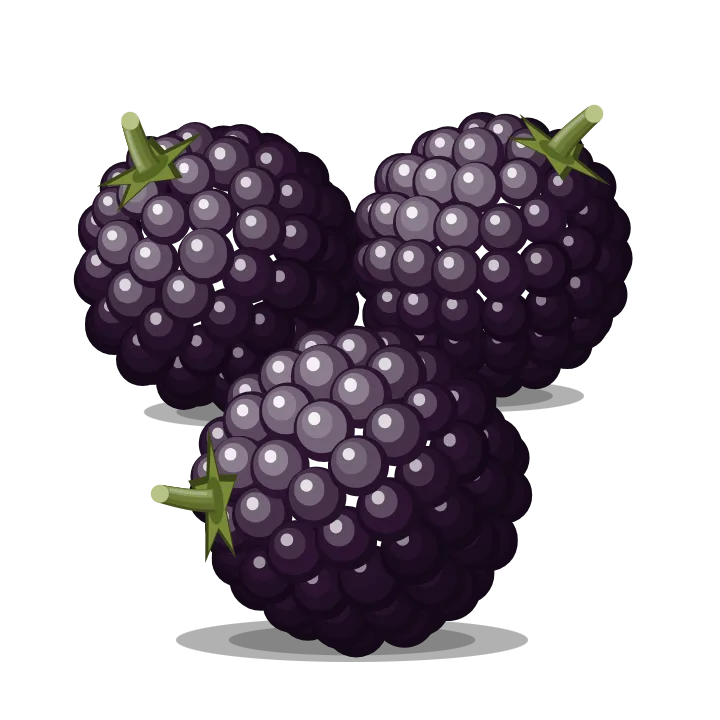
Blackberry
Rubus spp.
fruit
Black, juicy berries of the bramble, a thorny sub-shrub 1 to 7 metres tall of temperate hedges and woods; picked at the end of summer along the paths. They provide anthocyanins, ellagitannins and fibre.
- Origin
- Hedgerows and brambles of Europe
- Season (United States)
- August to September · grows in your region
- Preparation
- Eaten raw and whole, seeds included, after a quick rinse; also cooked into jam, jelly or tarts. Its skin is eaten, and that is where its polyphenols sit: worth keeping, then — but under running water, rubbing it, which is what takes off most of what settles there, organic or not.
- Molecules
- Anthocyanins · Ellagitannins · Insoluble fibersIn small amounts, not counted Pectins · Vitamin C · Manganese
- Did you know?
- Blackberry brambles form over 375 species, so often crossed and cloned that botanists group them into “aggregates”; and the French word for bramble, ronce, comes from the Latin rumex, “dart”.