
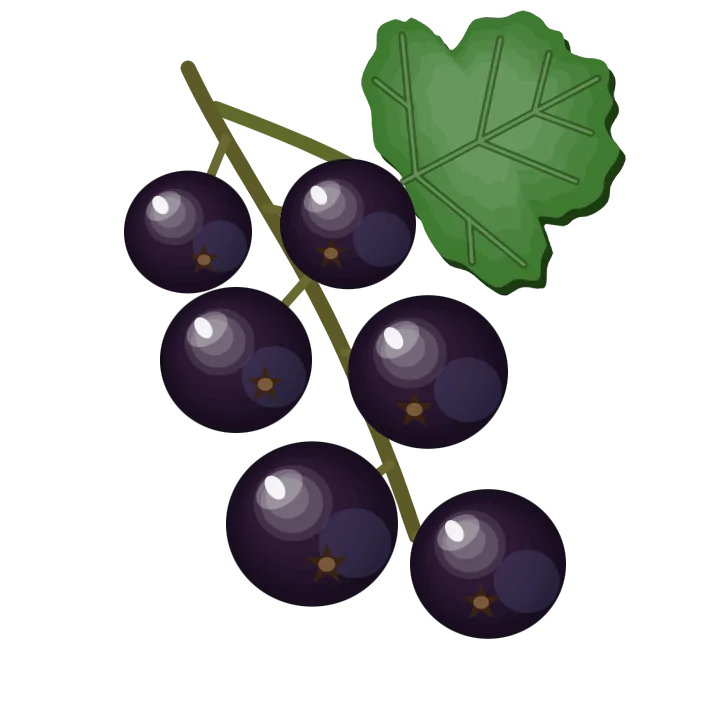
Blackcurrant
Ribes nigrum
fruit
Black, tart, very fragrant berries of a shrub from northern and central Europe, rarely eaten raw: liqueurs, jams, and the crème de cassis of a kir. They provide vitamin C, anthocyanins and quercetin.
- Origin
- Northern and Central Europe
- Season (United States)
- June to August · grows in your region
- Preparation
- The berries are stripped from their stalks with a fork, then eaten raw — very tart — or more often cooked into jam, jelly, syrup or coulis; skin and seeds are eaten. Its skin is eaten, and that is where its polyphenols sit: worth keeping, then — but under running water, rubbing it, which is what takes off most of what settles there, organic or not.
- Molecules
- Pectins · Anthocyanins · Flavonols (quercetin) · Vitamin C · Insoluble fibers
- Did you know?
- In the United States, growing it was banned for much of the 20th century: the blackcurrant spread a rust disease that threatened white pine forests.