
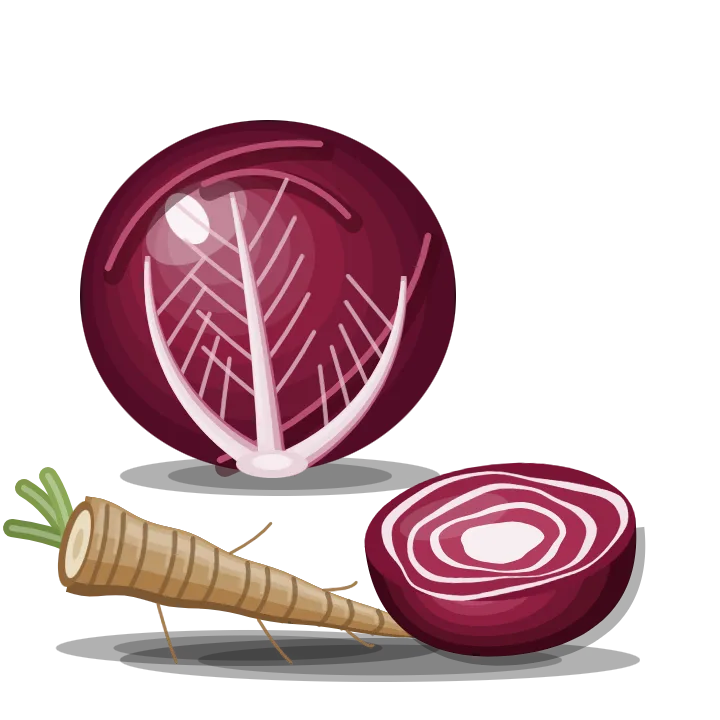
Chicory / radicchio
Cichorium intybus, C. pumilum
leaf · prebiotic
Bitter leaves of the chicories, the same species as Belgian endive: frisée, escarole, and the red Italian chicories, radicchio, round or in long tight leaves like the red of Treviso. They provide lutein, folate, nitrates and phenolic acids.
- Origin
- Mediterranean basin, selected in Italy
- Season (United States)
- October to March · grows in your region
- Preparation
- The leaves are separated, washed and eaten raw in salads, with a slightly sweet dressing or nuts to soften the bitterness; radicchio is also grilled or pan-fried, cut into wedges. It grows at ground level and catches the splashes of watering: washing it leaf by leaf, in plenty of water, beats a quick rinse of the whole bunch.
- Molecules
- Phenolic acids · Lutein and zeaxanthin · Vegetable nitrates · Folates (B9)In small amounts, not counted Fructans (inulin, FOS)
- Did you know?
- In Italy, the radicchios of Treviso, Verona and Chioggia are protected by a geographical indication.