
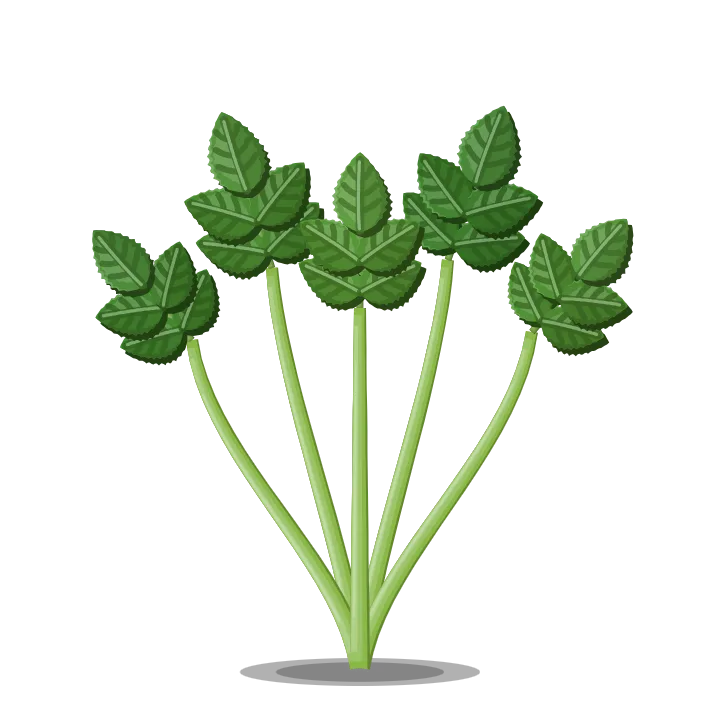
Minari (water dropwort)
Oenanthe javanica
herb · vegetable
⚠️ Toxic look-alike
Never eat this plant unless you are certain it is not its toxic look-alike.
It is an Oenanthe: its wild European cousins, hemlock water-dropwort and cowbane, which grow in the same ditches and at the water's edge, are among the most toxic plants in Europe (convulsions in under an hour, often fatal). Only cultivated minari, bought from an Asian grocery, is eaten. Hemlock water-dropwort has spindle-shaped roots whose cut surface oozes a sap that turns yellow in the air; cowbane has a hollow rootstock divided into small chambers. Never pick a plant of this kind at the water's edge.
If in the slightest doubt, leave it. If you feel unwell after eating it, even several hours later, call Poison Control (1-800-222-1222) or 911.
Crunchy stems and leaves tasting of celery and parsley, as namul, in Korean stews or Japanese nabe.
- Origin
- East Asia
- Season (United States)
- January to April
- Preparation
- The roots and damaged leaves are removed, then it is washed in plenty of water, as the plant grows in mud; the stems are cut into lengths and cooked for a minute, or eaten raw.
- Molecules
- In small amounts, not counted Lutein and zeaxanthin · Falcarinol · Chlorophyll
- Did you know?
- It is one of the seven herbs of nanakusa-gayu, the herb rice the Japanese eat on January 7.