
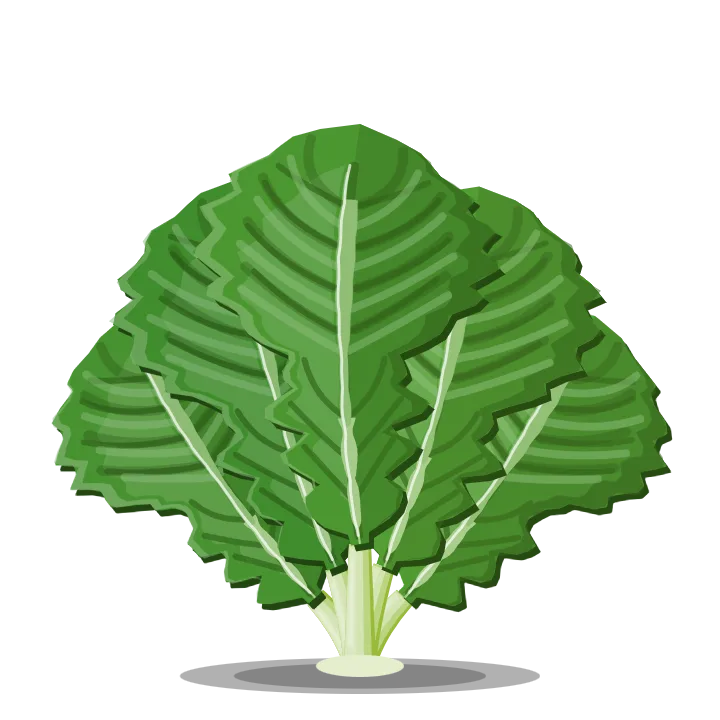
Mustard greens
Brassica juncea
leaf
Large, pungent leaves of brown mustard, a crucifer also grown for its seeds; stir-fried, braised or fermented. 100 g provide 70 mg of vitamin C and 115 mg of calcium, with pungent glucosinolates.
- Origin
- Central Asia and Himalayas
- Season (United States)
- September to April · grows in your region
- Preparation
- The leaves are washed and the tough rib removed, then they are stir-fried or braised for a few minutes — cooking softens their heat; young ones are eaten raw in salads. They are also fermented into pickles. It grows at ground level and catches the splashes of watering: washing it leaf by leaf, in plenty of water, beats a quick rinse of the whole bunch. The bite IS the molecule: long cooking erases it, raw and short cooking keep it. Most of its goitrogens go with cooking, even a short one.
- Molecules
- Lutein and zeaxanthin · Glucobrassicin → I3C · Pungent glucosinolates · Vitamin K1 · ChlorophyllIn small amounts, not counted CalciumWhat slows things down Goitrogens
- Did you know?
- Depending on the variety, it becomes Chinese zha cai, Nepali achar, or Japanese takana, pickled and tucked into onigiri.