
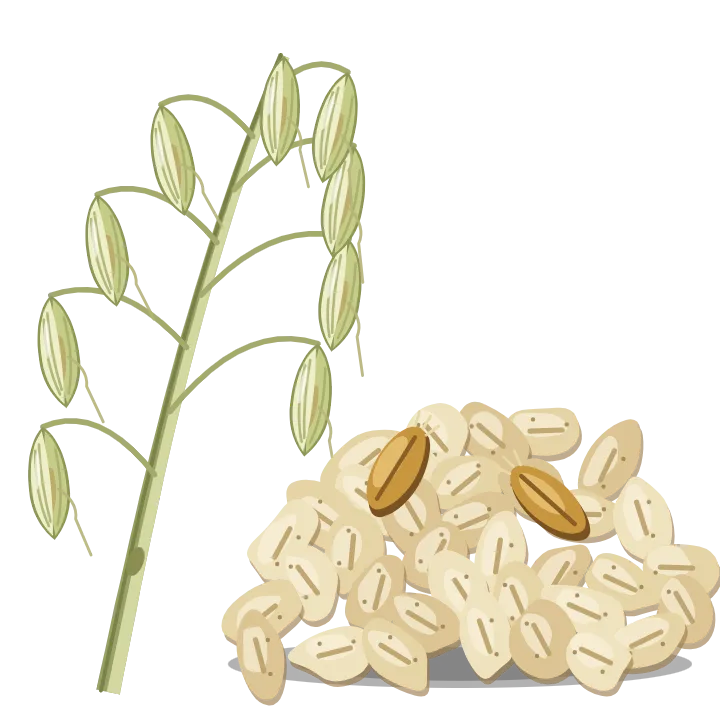
Oats
Avena spp.
grain · prebiotic
Grains of a grass domesticated in central and northern Europe around 2500 BCE; as flakes, groats or porridge. Its soluble beta-glucans feed the gut flora and help maintain normal cholesterol levels, from 3 g a day.
- Origin
- Europe and Asia Minor
- Season (United States)
- all year round · grows in your region
- Preparation
- The flakes are eaten raw, soaked for a few hours in milk or water, or cooked for five minutes as porridge. Thick flakes keep their beta-glucan better than instant flakes, so fine they digest almost like flour. Soaking, sprouting or sourdough bring its phytates down — and release the zinc and iron they were holding.
- Molecules
- Resistant starch RS1 · Arabinoxylans · Cereal beta-glucans · Phenolic acids · Avenanthramides · Saponins · Vitamin B1 (thiamine) · Plant iron · Zinc · Magnesium · Selenium · Copper · Manganese · Insoluble fibers · Protein · Methionine · Tryptophan · Vitamin B5 (pantothenic acid) · Vitamin B8 (biotin) · Phosphorus · Molybdenum · InositolIn small amounts, not counted Lignans · ErgothioneineWhat slows things down Phytates
- Did you know?
- Long given to horses for its supposed “exciting power”, it mostly fed the Scots, among whom its growing and eating long stayed concentrated.