
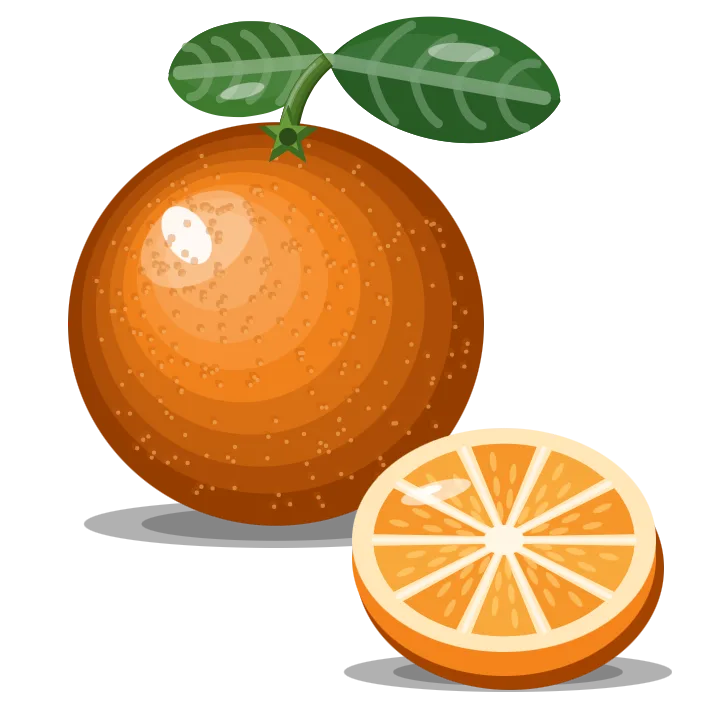
Orange
Citrus × aurantium
fruit
A juicy, sweet berry with a thick skin, the fourth most grown fruit in the world: blond, navel or blood orange, whose red flesh comes from anthocyanins triggered by a cold snap. Eaten whole rather than as juice, it keeps its pectin and hesperidin; 100 g provide 53 mg of vitamin C.
- Origin
- China and Southeast Asia
- Season (United States)
- all year round · grows in your region
- Preparation
- The white pith and threads, often removed, hold a good share of its fiber and hesperidin: better to eat them. The zest too, from an organic or untreated fruit. Freshly squeezed, its juice keeps about a third more vitamin C than store-bought juice: it does not like heat or time.
- Molecules
- Pectins · Flavanones · Vitamin C · InositolIn small amounts, not counted Beta-cryptoxanthin · Folates (B9) · Calcium · Potassium · Limonene
- Did you know?
- In the 19th century, an orange was a precious Christmas gift.