
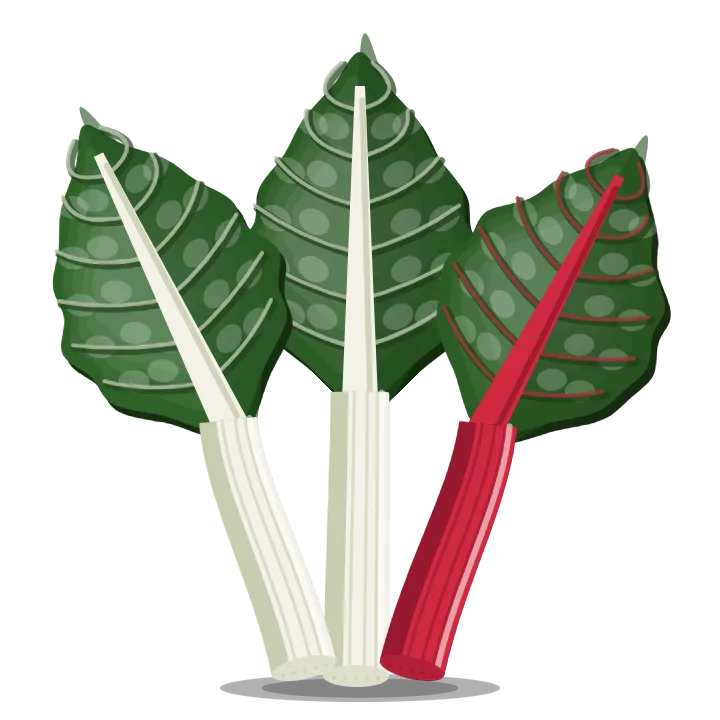
Swiss chard
Beta vulgaris
leaf · vegetable
Broad leaves and fleshy stalks, white or coloured, of a plant of the same species as beetroot, selected for its leaves; two vegetables in one. They provide beta-carotene, lutein, vitamin K1, magnesium and potassium.
- Origin
- Mediterranean basin
- Season (United States)
- June to November · grows in your region
- Preparation
- The stalks need about ten minutes more than the leaves: cooking them separately avoids having one mushy and the other still hard. It grows at ground level and catches the splashes of watering: washing it leaf by leaf, in plenty of water, beats a quick rinse of the whole bunch. Its oxalates leach into water: boiling it and throwing the water out takes a good share with it.
- Molecules
- Beta-carotene (vitamin A) · Lutein and zeaxanthin · Vegetable nitrates · Vitamin K1 · Magnesium · Potassium · ChlorophyllIn small amounts, not counted Betalains · Betaine · Folates (B9) · Vitamin E · Plant iron · Vitamin B2 (riboflavin)What slows things down Oxalates
- Did you know?
- In Nice, the chard tart, torta de blea, is served as a main dish or as a sweet dessert.