
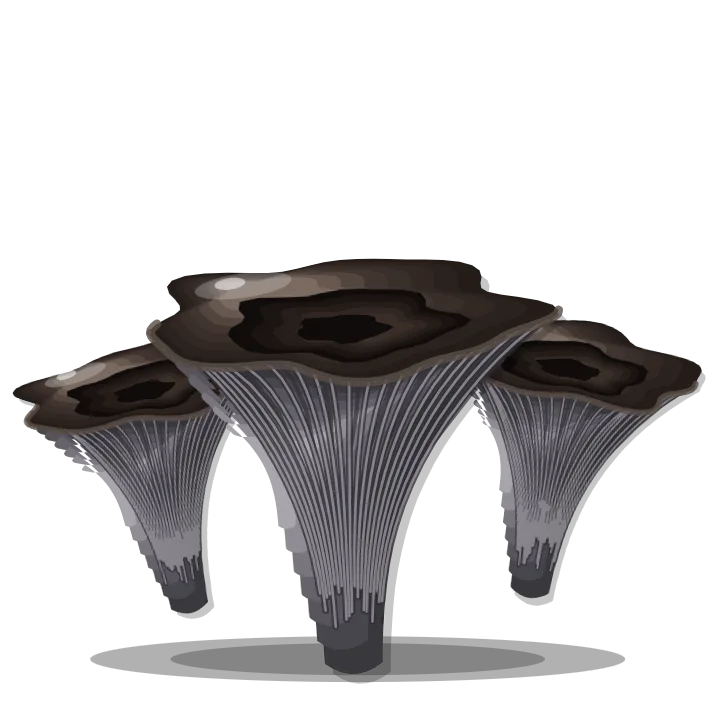
Yellowfoot (winter chanterelle)
Cantharellus cinereus, Craterellus tubaeformis
mushroom
A small chanterelle with a hollow yellow stem and a brown cap, growing in troops in moss in late autumn; sautéed, dried or in soup. Its brown cap sets it apart from the chanterelle, yellow all over and fleshy, and its forked ridges from the yellow chanterelle, which is almost smooth underneath.
- Origin
- Forests of Europe and North America
- Season (United States)
- September to December · grows in your region
- Preparation
- It is eaten cooked, pan-fried for about ten minutes; dried, it is rehydrated for a quarter of an hour. Only bought: its look-alike, the deadly webcap, grows in the same damp forests. In Sweden it was mistaken for yellowfoot, among others: from 1979 to 1993, 22 people were poisoned, and nine needed a kidney transplant. Yellowfoot has a funnel-shaped cap, hollow in the middle, with forked ridges underneath; the webcap has a tawny-brown cap, conical or domed, true ochre gills that turn brown, and a stem swollen at the base. The first signs only appear after about a day, and kidney failure sets in one to three weeks later. If you pick it yourself, have the mushroom checked by a pharmacist or a mycological society before eating it.
- Molecules
- Mushroom beta-glucansIn small amounts, not counted Ergothioneine
- Did you know?
- In Sweden and Finland, it is the mushroom of the first cold: it is picked until the snow.