
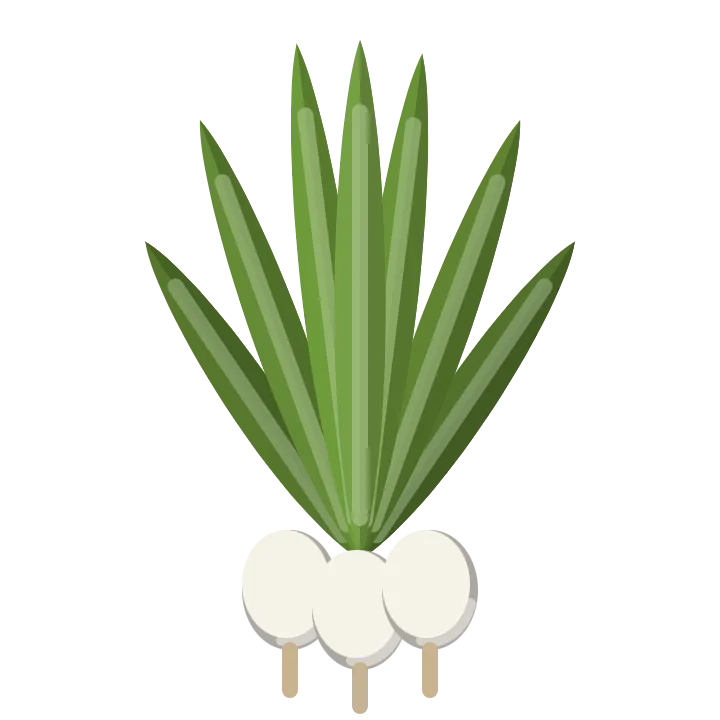
Wild garlics
Allium spp.
herb · vegetable
⚠️ Toxic look-alike
Never eat this plant unless you are certain it is not its toxic look-alike.
In North America, death camas, which is deadly, grows with them and looks like them; elsewhere, autumn crocus and lily of the valley. Only a clear smell of garlic or onion, from a crushed leaf, tells them apart, and a hand that already smells of garlic can tell nothing any more.
If in the slightest doubt, leave it. If you feel unwell after eating it, even several hours later, call Poison Control (1-800-222-1222) or 911.
Wild onions and garlics of dozens of species, leaves and small bulbs raw or cooked: nodding onion of the Rockies, field garlic of Europe, jambu of the Himalayas.
- Origin
- Meadows, woods and mountains of the Northern Hemisphere
- Season (United States)
- March to June · grows in your region
- Preparation
- Leaves and small bulbs are eaten raw, chopped, or just seared; the dry skin of the bulbs is removed. When gathered, they must smell of garlic or onion when crushed: without that smell, they are not eaten. Chop or crush it, then wait ten minutes before cooking: that is how long its sulfur compounds take to form.
- Molecules
- Fructans (inulin, FOS) · Allium sulfur compoundsIn small amounts, not counted Lutein and zeaxanthin · Chlorophyll
- Did you know?
- In Garhwal, in the Himalayas, the dried leaves of one of them, jambu, flavor dal like a spice.